Colorful Neon 3D Lettering: A Comprehensive Evaluation
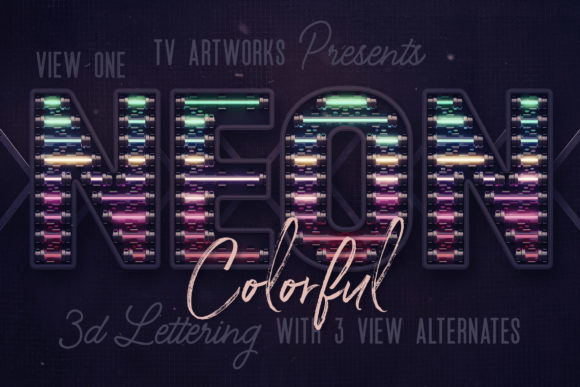
In the landscape of modern graphic design, visual impact is often determined by the ability to create depth and vibrancy within a two-dimensional space. Colorful Neon 3D Lettering represents a specific category of digital assets designed to simulate the luminous, glowing aesthetic of traditional neon signage while adding three-dimensional structure. For designers, marketers, and content creators seeking realistic neon style lettering graphic elements, this resource offers a structured set of tools intended for artistic projects. The collection typically includes 3D style letterings, color fonts, and bonus graphic elements that allow users to construct custom typography scenes without needing advanced 3D modeling software.
Understanding the Core Components
The foundation of this asset type lies in its versatility regarding file formats and viewing angles. A standard package of Colorful Neon 3D Lettering usually provides lettering sets available in three distinct view types. This variation allows for dynamic composition, enabling the user to rotate or reorient text to fit specific layout requirements. The primary files are delivered as high-resolution transparent PNGs, typically measuring 3000 x 3000 pixels. This resolution ensures that the graphics remain crisp when scaled for large-format print materials or viewed on high-density displays.
Beyond the static images, these collections often include bonus 3-color OTF (OpenType Font) files. These specialized fonts are engineered to render characters with built-in color gradients and shading that mimic the physical properties of neon tubing. However, it is important to note the technical constraints associated with these font files. They generally require specific software environments, such as Adobe Photoshop CC 2017, Illustrator CC 2018, or compatible Mac applications, to function correctly. Without the appropriate software setup, the color effects may not display smoothly, necessitating a review of system compatibility before purchase or download.
Practical Applications and Usage Scenarios
The utility of Colorful Neon 3D Lettering extends across a broad spectrum of design disciplines. Because the assets are provided as drag-and-drop elements, they streamline the workflow for creating complex compositions. Designers can assemble custom scenes by combining individual letters, numbers, and special characters alongside bonus graphic elements. The latter often include up to 12 high-resolution transparent PNG images featuring abstract shapes or lighting effects, some reaching resolutions of 10,000 pixels.
This flexibility makes the assets highly suitable for:
- Social Media Marketing: Creating eye-catching posts and stories that stand out in crowded feeds.
- Print Materials: Producing flyers, posters, and banners where vibrant colors are essential for attention.
- Branding and Packaging: Developing logos and product labels that convey a modern, energetic brand identity.
- Merchandise: Designing artwork for t-shirts, phone cases, and greeting cards.
- Digital Presence: Enhancing website headers, blog graphics, and marketing campaign visuals.
The "ready for print or online use" nature of these files means that a single project can utilize the same assets across multiple mediums, ensuring consistency in visual language regardless of the output format.
Evaluating Benefits and Tradeoffs
When considering whether to integrate Colorful Neon 3D Lettering into a workflow, it is crucial to weigh the benefits against potential limitations. The primary advantage is efficiency. Creating realistic neon effects from scratch using vector software requires significant time and expertise in manipulating gradients, outer glows, and bevels. Pre-made 3D lettering assets eliminate this learning curve, allowing for immediate application.
However, there are tradeoffs to consider regarding customization and technical dependency. While the assets offer a "drag and drop" simplicity, they may lack the granular control of native vector paths found in standard font files. If a project requires modifying the curvature of a specific letter or adjusting the thickness of the tube in a way the preset does not support, the designer may face restrictions. Furthermore, the reliance on color fonts introduces a barrier to entry for clients or collaborators who do not have access to the required versions of Adobe Creative Cloud or specific Mac applications. In such scenarios, the recipient of the file might see only flat colors or default black text unless the specific software environment is replicated.
Situational Fit and Alternatives
This type of asset is a strong fit for professionals working on short-term campaigns, social media bursts, or projects with tight deadlines where speed is prioritized over bespoke illustration. It is particularly effective for designs that need to evoke a retro-futuristic, nightlife, or urban aesthetic. The availability of numbers 0-9 and special characters ensures that the set is comprehensive enough for most headline and pricing needs.
Conversely, alternatives may be worth considering if the project demands absolute precision in typography or cross-platform compatibility. For instance, if the final output must be viewed on devices that cannot process OpenType color features, standard vector outlines or SVG files would be more reliable. Additionally, if the design requires a unique typographic voice that deviates significantly from standard sans-serif or serif structures, hiring a custom type designer might yield better long-term results than adapting pre-existing 3D lettering sets.
Decision-Making Insights
To determine if Colorful Neon 3D Lettering aligns with your goals, evaluate your current software ecosystem and the specific visual requirements of your upcoming projects. Ask yourself if you have the necessary versions of Photoshop or Illustrator to utilize the color font bonuses effectively. If the answer is yes, the inclusion of 3000 x 3000 pixel transparent PNGs and 10,000 pixel bonus elements offers a high value proposition for both web and print workflows.
Furthermore, consider the longevity of the design. While neon aesthetics are trendy, they can sometimes date quickly if not executed carefully. The transparency and modularity of these PNG elements allow for layering and blending with other textures, which can help modernize the look and prevent the design from appearing generic. By understanding the capabilities and limitations of these graphic elements, designers can make informed decisions that enhance their creative output without compromising on quality or technical feasibility.
Ultimately, the decision rests on the balance between the desire for rapid, high-impact visuals and the need for full technical control. For those looking to create realistic neon style lettering graphic elements efficiently, this resource provides a robust toolkit, provided the technical prerequisites are met.