Infographic 3D Hexagon Square Gradient: A Modern Vector Resource for Business Visualization
In the competitive landscape of digital marketing and corporate communication, visual clarity is often the deciding factor between a message that resonates and one that is ignored. The Infographic 3D Hexagon Square Gradient emerges as a significant asset in this domain, offering a sophisticated blend of geometric precision and modern aesthetic appeal. This vector resource is specifically designed to structure complex data into digestible formats, making it an essential tool for professionals who need to convey workflows, timelines, or strategic plans effectively.
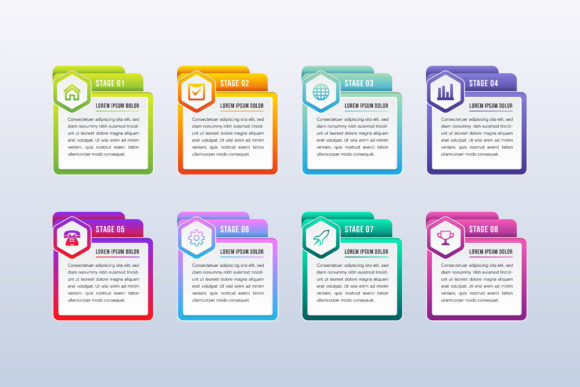
This design features eight distinct options or steps, arranged within a hexagonal framework that incorporates gradient coloring. Unlike flat, two-dimensional designs that can sometimes appear dated, the three-dimensional aspect adds depth and realism, drawing the viewer's eye naturally through the content. The inclusion of square elements alongside the hexagons provides a balanced composition, allowing for flexible icon placement and text integration. Whether used for a high-stakes presentation slide or a detailed workflow layout, this template addresses the fundamental need for organized, visually engaging information architecture.
Structural Integrity and Visual Design
The core strength of the Infographic 3D Hexagon Square Gradient lies in its geometric construction. The hexagon has long been favored in infographic design because it allows for tessellation, meaning multiple units can fit together seamlessly without gaps. In this specific vector set, the hexagon serves as the primary container for individual steps or data points. The "Square" element mentioned in the title likely refers to the supporting icons or the background grid that anchors the design, creating a sense of stability and order.
The gradient effect is not merely decorative; it serves a functional purpose in guiding the user's attention. By transitioning colors smoothly from one hexagon to the next, the design implies progression and flow. This is particularly useful for process diagrams where the sequence of events matters. The use of vibrant, colorful gradients ensures that the graphic stands out against white or dark backgrounds, making it versatile for both print reports and web banners. The 3D rendering technique gives the elements a tactile quality, suggesting that the data contained within is substantial and well-structured.
- Geometric Harmony: The combination of hexagons and squares creates a dynamic yet balanced visual rhythm.
- Depth Perception: The 3D shading adds dimension, preventing the chart from looking flat or generic.
- Color Psychology: The gradient choices are optimized to evoke professionalism while maintaining energy and engagement.
Practical Applications in Professional Workflows
Professionals across various sectors can leverage this Infographic 3D Hexagon Square Gradient to enhance their communication strategies. For entrepreneurs and small business owners, the ability to visualize a five-step or eight-step plan is crucial for pitching ideas to investors or explaining operational processes to new employees. The template acts as a ready-made skeleton upon which specific business concepts can be hung.
Consider a scenario where a marketing team needs to present a campaign timeline. Instead of using a standard linear bullet list, they can utilize the eight options provided in this vector set. Each hexagon can represent a phase of the campaign, such as research, strategy, execution, and analysis. The icons included in the design allow for immediate visual cues, reducing the cognitive load on the audience. Similarly, educators and freelancers can use these graphics to break down complex topics into manageable chunks for students or clients.
The flexibility of the vector format means the design can be scaled without losing quality. It is equally effective when shrunk down to fit a mobile screen or enlarged for a large conference banner. This scalability is a critical feature for anyone working with diverse media types, from printed brochures to digital slideshows. The "flowchart" capability inherent in the design allows users to map out decision trees or organizational hierarchies with ease.
Usability and Customization Potential
One of the most valuable aspects of this resource is its adaptability. While the default design offers a polished look, the vector nature of the file allows for extensive customization. Users can alter the color palette to match their brand identity, ensuring consistency across all marketing materials. The text fields can be expanded or contracted depending on the length of the content, and the icons can be replaced with industry-specific symbols.
The layout supports a logical flow, typically moving from left to right or top to bottom, which aligns with natural reading patterns. This makes the Infographic 3D Hexagon Square Gradient intuitive for viewers. However, successful implementation requires thoughtful content planning. The eight options should not be arbitrary; they must represent a coherent narrative or a logical sequence of actions. If the content is too dense, the visual impact may be diminished, so concise text is recommended.
- Brand Alignment: Modify gradients to reflect corporate colors.
- Content Prioritization: Ensure the most important step is highlighted.
- Icon Selection: Use clear, universally recognized symbols to avoid confusion.
- Contextual Fit: Adjust the size and orientation based on the medium (web vs. print).
Evaluating Quality and Long-Term Value
When assessing resources like the Infographic 3D Hexagon Square Gradient, reliability and longevity are key factors. High-quality vector files ensure that the graphics remain crisp regardless of resolution. This eliminates the pixelation issues common with raster images, providing a professional finish every time. The design avoids fleeting trends in favor of a timeless geometric style, which increases its utility over time.
The inclusion of "eight options" provides a comprehensive structure for detailed processes. While some projects may require fewer steps, having the option to leave certain hexagons blank or merge them allows for a degree of creative freedom. The design does not force a rigid structure but rather offers a robust framework that can accommodate various data sets. This balance between structure and flexibility is what defines a truly useful graphic resource.
However, there are limitations to consider. The 3D effect, while attractive, may not suit every minimalist aesthetic. Brands with a strictly flat design philosophy might find the shading too heavy. Additionally, the complexity of the gradient might require more processing power if used in low-bandwidth web environments, though this is rarely an issue for static presentations. Users should also be mindful of accessibility; ensuring sufficient contrast between the gradient colors and the text is essential for readability by all audiences.
Strategic Integration for Maximum Impact
To get the most out of this vector asset, it should be integrated thoughtfully into broader communication strategies. It is not just a decoration but a functional tool for organization. When used in a report, it can serve as an executive summary visualization. In a presentation, it can anchor a slide deck, providing a visual reference point throughout the talk. For web usage, it can break up long blocks of text, increasing engagement and retention rates.
The effectiveness of the Infographic 3D Hexagon Square Gradient ultimately depends on the synergy between the visual design and the underlying data. A beautiful chart cannot fix poor logic or unclear messaging. Therefore, users should focus on refining their content before applying the template. Once the narrative is solid, this design can elevate the presentation, transforming dry data into a compelling visual story. It bridges the gap between abstract concepts and concrete understanding, making it an invaluable addition to any creator's toolkit.
For professionals seeking to streamline their workflow and enhance the visual quality of their deliverables, this resource offers a practical solution. It combines the structural benefits of hexagonal grids with the modern appeal of 3D gradients, resulting in a versatile tool for business, education, and personal projects. By understanding its strengths and limitations, users can deploy this graphic with confidence, ensuring their messages are not only seen but understood.