3D Isometric: Designing Dynamic Urban Worlds
Imagine a city where the sky is always visible, traffic flows in perfect geometric harmony, and every building tells a story of scale and structure. This is the power of 3D Isometric, a visual language that transforms flat screens into immersive landscapes. For creators, designers, and entrepreneurs, this perspective offers more than just aesthetic appeal; it provides a functional framework for explaining complex systems, showcasing urban infrastructure, and engaging audiences with clarity.
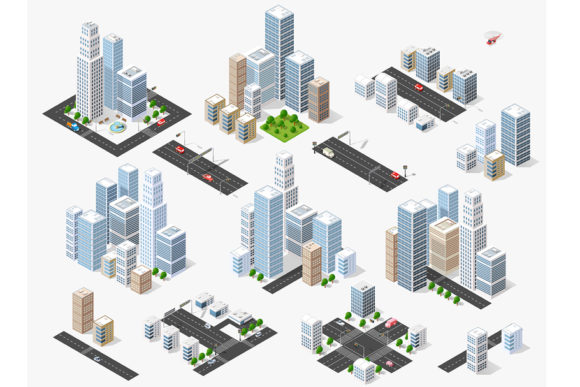
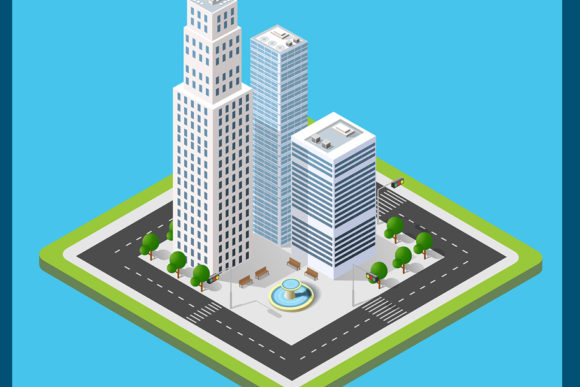
The term isometric refers to a specific type of parallel projection used in technical drawing and computer graphics. Unlike traditional perspective, where lines converge at a vanishing point to create depth, isometric art maintains parallel lines throughout the composition. This creates a unique sense of three-dimensionality without the distortion found in standard 3D views. When applied to a three-dimensional city filled with houses, skyscrapers, and bustling streets, the result is a clean, organized, and highly readable environment that feels both futuristic and grounded.
Why Choose the Isometric Perspective?
The enduring popularity of this style stems from its ability to balance realism with abstraction. In a standard top-down view, a city looks like a map—functional but often cold. In a full 3D perspective, the scene can become cluttered, with buildings obscuring one another and making it difficult to understand the layout. The 3D Isometric approach hits the "sweet spot" by revealing the height, width, and depth of structures simultaneously.
This makes it an ideal tool for:
- Data Visualization: Presenting urban statistics, population density, or traffic flow without overwhelming the viewer.
- Game Development: Creating strategy games where players manage resources, build cities, or navigate complex environments.
- Architectural Presentation: Showing potential clients how a new development fits into an existing neighborhood.
- Marketing & Branding: Designing icons and illustrations that communicate reliability and structure.
When you look at a rendered scene featuring skyscrapers towering over residential houses, the isometric angle allows the eye to travel across the entire street grid. You can see the traffic on the roads, the windows on the high-rises, and the rooftops of smaller homes all at once. This comprehensive view is essential for anyone needing to convey spatial relationships clearly.
Creative Applications for Modern Creators
Whether you are a freelancer looking to expand your portfolio or a small business owner trying to explain a service, the versatility of this style is unmatched. Let's explore how different professionals can adapt these concepts for their specific goals.
For Educators and Content Creators
Educational content often struggles with abstract concepts. By using a 3D Isometric city as a metaphor, teachers and bloggers can make learning tangible. Imagine an article about logistics or supply chains illustrated with a miniature city where trucks move along streets with traffic between warehouses and retail stores. The visual clarity helps students grasp the flow of goods instantly. Similarly, history lessons can be brought to life by showing the evolution of a city from simple wooden houses to modern concrete skyscrapers, highlighting architectural changes over time.
For Entrepreneurs and Startups
Startups often need to pitch complex ideas quickly. A static slide deck might fail to capture attention, but a dynamic 3D Isometric illustration can do the heavy lifting. If you are launching a smart home app, visualize the user's house connected to a larger network of energy grids and transportation systems within an isometric cityscape. This approach demonstrates connectivity and scale effectively. It signals to investors that the business understands the broader ecosystem, not just the product itself.
For Marketers and Publishers
In a crowded digital landscape, visuals are the first thing users notice. Isometric art stands out because it feels structured and intentional. Publishers can use these images to break up long-form text, creating "visual anchors" that keep readers engaged. For marketing campaigns, consider creating a series of illustrations showing different aspects of a lifestyle—from morning commutes in busy traffic to evening relaxation in quiet residential areas. These variations allow brands to tell a complete story of daily life without relying on generic stock photography.
Building Your Own Urban Infrastructure
Creating a compelling scene requires more than just stacking cubes. To achieve professional results, you must focus on consistency, color theory, and narrative detail. Here is a practical guide to designing effective 3D Isometric projects.
- Define Your Grid System: Everything in an isometric world relies on a consistent grid. Whether you are using software like Blender, Spline, or Illustrator, ensure your angles (typically 30 degrees) remain uniform. Inconsistent angles will break the illusion of depth and make the image look amateurish.
- Establish a Color Palette: A well-designed city needs a cohesive look. Decide on a mood before you start modeling. Do you want a sunny, vibrant metropolis with bright green parks and blue skies? Or perhaps a moody, cyberpunk-inspired night scene with neon lights reflecting off wet pavement? Consistent lighting and shadowing are crucial for maintaining the three-dimensional feel.
- Add Life Through Details: An empty city looks like a blueprint. To make it engaging, add elements of life. Place tiny cars on the streets with traffic, add trees to sidewalks, and vary the textures of the building materials. Small details like streetlights, bus stops, and pedestrians transform a collection of shapes into a living community.
- Focus on Hierarchy: Not every building should be equally prominent. Use size and placement to guide the viewer's eye. Typically, a central skyscraper or a landmark building serves as the focal point, while surrounding houses and smaller structures provide context and scale.
Variations and Styles to Explore
The beauty of 3D Isometric lies in its adaptability. While the classic style mimics technical drawings, modern interpretations offer endless possibilities. You might experiment with low-poly aesthetics, which use fewer polygons to create a stylized, retro look that is lightweight and fast-loading for web applications. Alternatively, you could opt for a flat design hybrid, combining isometric geometry with solid colors and minimal shading for a clean, corporate appearance.
Another popular variation involves adding motion. Static images are powerful, but animated isometric scenes can demonstrate processes dynamically. Imagine a loop showing a factory producing goods, shipping them via truck, and delivering them to a store. This kind of animation is incredibly effective for explainer videos or landing pages where you need to show cause and effect.
Maintaining Clarity and Originality
As you develop your own projects, remember that the goal is communication, not just decoration. Avoid overcrowding the scene with too many elements. If every inch of the image is filled with buildings and cars, the viewer won't know where to look. Leave negative space around key subjects to let them breathe. This principle applies whether you are designing a single icon or a massive cityscape.
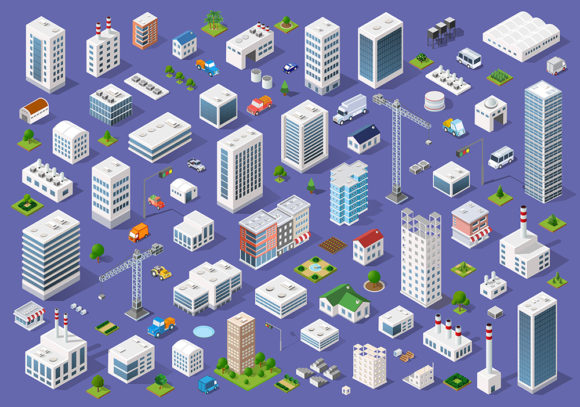
Furthermore, strive for originality. While there are thousands of pre-made assets available, copying them directly limits your creative potential. Try to mix styles, combine different eras of architecture, or introduce unique color schemes that reflect your brand identity. A unique 3D Isometric city can become a signature element of your work, setting you apart from competitors who rely on generic templates.
Ultimately, the top view of urban infrastructure provided by isometric design is a tool for storytelling. It allows us to see the big picture while appreciating the intricate details that make a system work. Whether you are designing a game level, presenting a business plan, or simply exploring your creativity, embracing this perspective opens up a world of possibilities. By focusing on clear structure, thoughtful details, and purposeful design, you can create visuals that are not only beautiful but also deeply meaningful and effective.