Set 3D Isometric: A Practical Guide to Building Urban Scenes
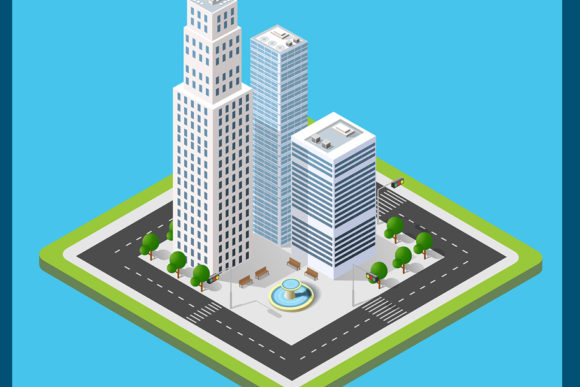
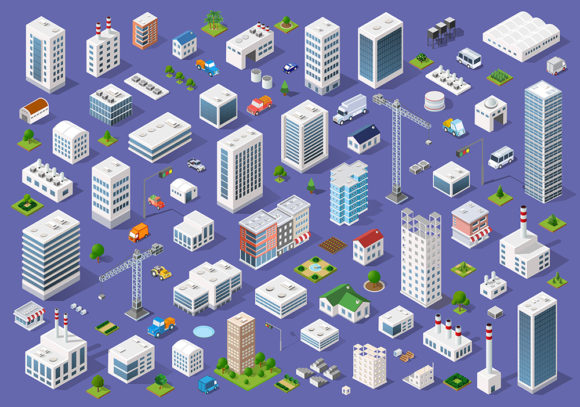
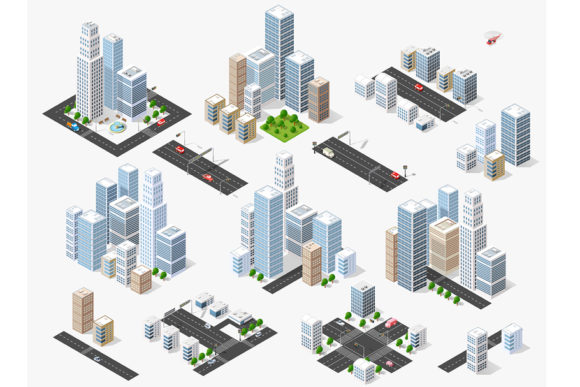
If you have ever stared at a complex blueprint or tried to visualize a new app interface without getting lost in technical jargon, you know how frustrating it can be. That is exactly where Set 3D Isometric steps in. It is not just another graphic design trend; it is a functional toolkit designed to turn abstract ideas into tangible, three-dimensional cityscapes. By combining houses, skyscrapers, buildings, and streets with traffic, this set provides a top-down view of urban infrastructure that feels both realistic and stylized.
For creators, entrepreneurs, and educators, the value lies in clarity. When you need to explain a logistics network, a neighborhood development plan, or a game level layout, flat two-dimensional maps often fail to convey depth and scale. A three-dimensional city rendered in isometric perspective solves this problem immediately. It allows your audience to see the relationship between structures and the flow of movement within them without needing a degree in architecture to understand the scene.
Why Isometric Views Dominate Modern Design
The isometric style has surged in popularity over the last decade, but its utility goes far beyond aesthetics. Unlike perspective views that converge at a vanishing point, isometric projections maintain parallel lines. This unique quality makes them perfect for information design. When you are looking at a Set 3D Isometric collection, you are seeing a system where every element remains consistent in size regardless of its distance from the viewer.
This consistency is crucial for anyone creating digital assets who needs to communicate data efficiently. Whether you are designing an infographic about population density or building a mockup for a smart city application, the lack of distortion ensures that measurements and spatial relationships remain accurate. The "top view" aspect mentioned in many design briefs is particularly powerful because it mimics the way we naturally survey our surroundings from a high vantage point, like a drone or a tower.
Real-World Applications for Creators and Marketers
Let's talk about practical scenarios. Imagine you are a freelancer pitching a concept to a client for a new residential community. Instead of sending a dry PDF with floor plans, you present a vibrant, interactive scene featuring houses, skyscrapers, and bustling streets. The client can instantly grasp the density, the green spaces, and the traffic flow. This visual storytelling builds trust faster than any spreadsheet ever could.
Similarly, for bloggers and content creators, these assets are gold mines. If you write about urban planning, real estate trends, or technology in cities, static images often feel disconnected from reality. Integrating a Set 3D Isometric graphic allows you to break up text-heavy articles with engaging visuals that draw readers in. You can highlight specific areas, such as a busy intersection with traffic, to illustrate a point about congestion or public transport efficiency.
Marketers also find immense value here. When launching a product related to construction, gaming, or even logistics software, a generic background image rarely cuts through the noise. A custom-built city scene using isometric assets creates a sense of immersion. It suggests a world where your product exists and functions. For example, if you are promoting a delivery service app, showing a miniature city with moving vehicles on the streets implies speed, coverage, and reliability.
Educational Tools and Professional Workflows
Beyond commercial use, Set 3D Isometric resources are transforming how educators teach complex subjects. Geography teachers can use these sets to demonstrate urban sprawl, while history instructors might show the evolution of city layouts from ancient times to the modern era. The ability to layer different elements—like adding a new highway or changing the type of housing—makes it easy to create dynamic lesson plans that adapt to student questions.
In professional settings, architects and urban planners often rely on these models during the initial conceptual phases. Before committing to expensive 3D rendering software or physical prototypes, they can sketch out ideas using pre-made isometric blocks. This workflow saves time and money. It allows teams to iterate quickly, testing different configurations of buildings and infrastructure to see what works best visually and functionally.
Gamers and indie developers also lean heavily on this style. Many successful simulation games, strategy titles, and mobile apps utilize isometric graphics because they offer a clear view of gameplay mechanics without overwhelming the user with photorealistic details. The Set 3D Isometric collection provides the necessary components to build entire worlds from scratch, ensuring that the aesthetic remains cohesive throughout the project.
Key Benefits Across Different Industries
- Clarity in Communication: Complex data becomes simple when visualized as a city map with distinct zones.
- Creative Flexibility: Users can mix and match skyscrapers, houses, and street elements to create unique environments.
- Cost Efficiency: Buying a comprehensive set is often cheaper than commissioning custom illustrations for every project.
- Scalability: These assets work well on everything from small mobile screens to large presentation monitors.
What to Consider Before Using Set 3D Isometric
While the potential is vast, adopting these tools requires a bit of strategic thinking. Not all Set 3D Isometric collections are created equal. When choosing a resource, look for consistency in lighting and shadow. A disjointed set where one building looks sunny and another looks gloomy will break the illusion of a unified world. Ensure that the traffic elements, such as cars or pedestrians, match the scale of the surrounding buildings.
Another critical factor is file format and compatibility. Are you working in a vector-based program like Adobe Illustrator, or do you need raster images for web use? Some sets come in layers, which is fantastic for customization, allowing you to change colors or remove specific elements. Others might be flattened images, which are easier to use but harder to edit. For hobbyists and small business owners, ease of use should be a priority. Look for sets that include instructions or tutorials on how to assemble the pieces.
Also, consider the intended output. If you are printing brochures, ensure the resolution is high enough to prevent pixelation. If you are creating web animations, check if the assets support transparency or if they are part of a sprite sheet. Understanding your end goal before downloading or buying will save you hours of frustration later. Remember, the best tool is the one that fits seamlessly into your existing workflow rather than forcing you to learn a completely new system.
Making the Most of Your Assets
Once you have your set, don't just drop it into a document and call it a day. Experiment with composition. Try placing a cluster of houses next to towering skyscrapers to create contrast. Use the streets to guide the viewer's eye through the image. Add traffic to inject life and movement into the scene. The more you play with the arrangement, the more unique your final product will become.
For those interested in storytelling, think about the narrative hidden in the city. Who lives in those apartments? Where does the traffic go? What happens when the sun sets? By treating the Set 3D Isometric as a stage for your story, you elevate the visual from a mere decoration to a compelling piece of communication. Whether you are an educator explaining a concept, a marketer selling a vision, or a developer building a game, this versatile toolkit offers the foundation you need to succeed.
In a world saturated with generic stock photos, offering a tailored, three-dimensional city view sets you apart. It shows attention to detail and a commitment to clarity. As you explore the possibilities of urban infrastructure design, remember that the goal is not just to make things look pretty, but to make them understandable. With the right approach, Set 3D Isometric becomes more than just a collection of graphics; it becomes a language for sharing ideas.